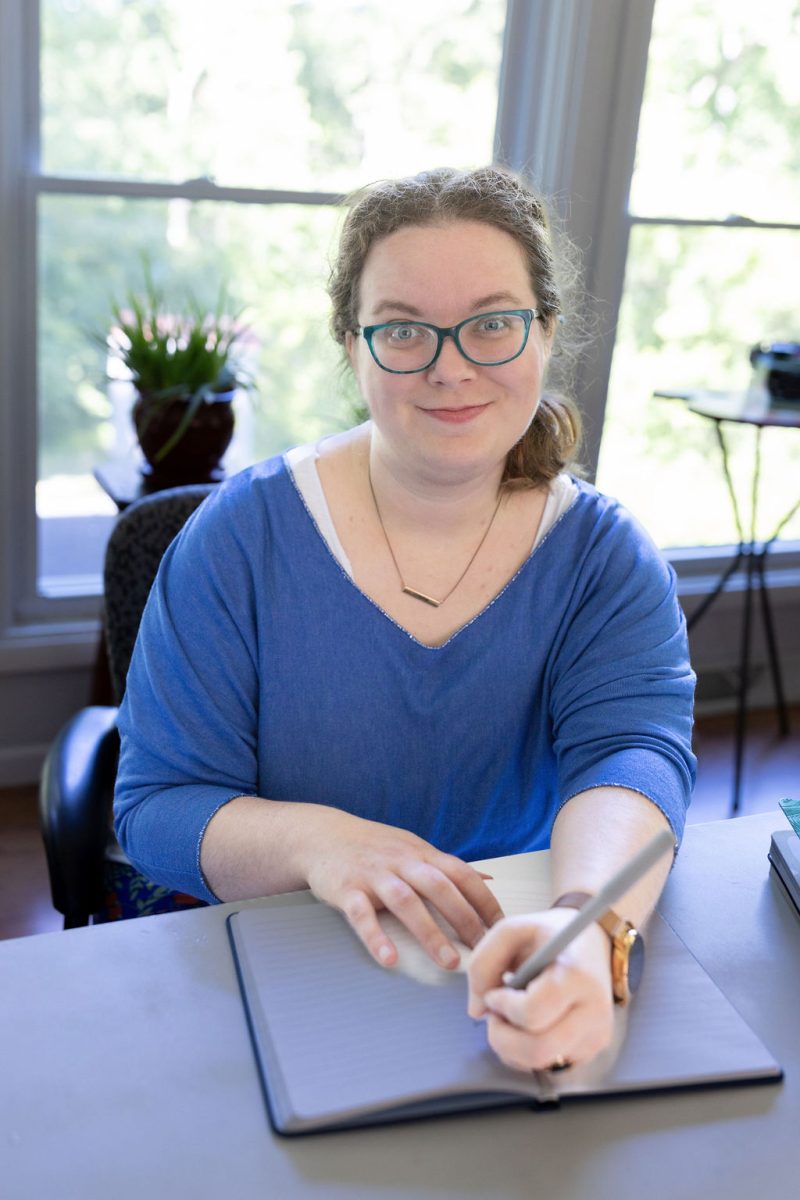
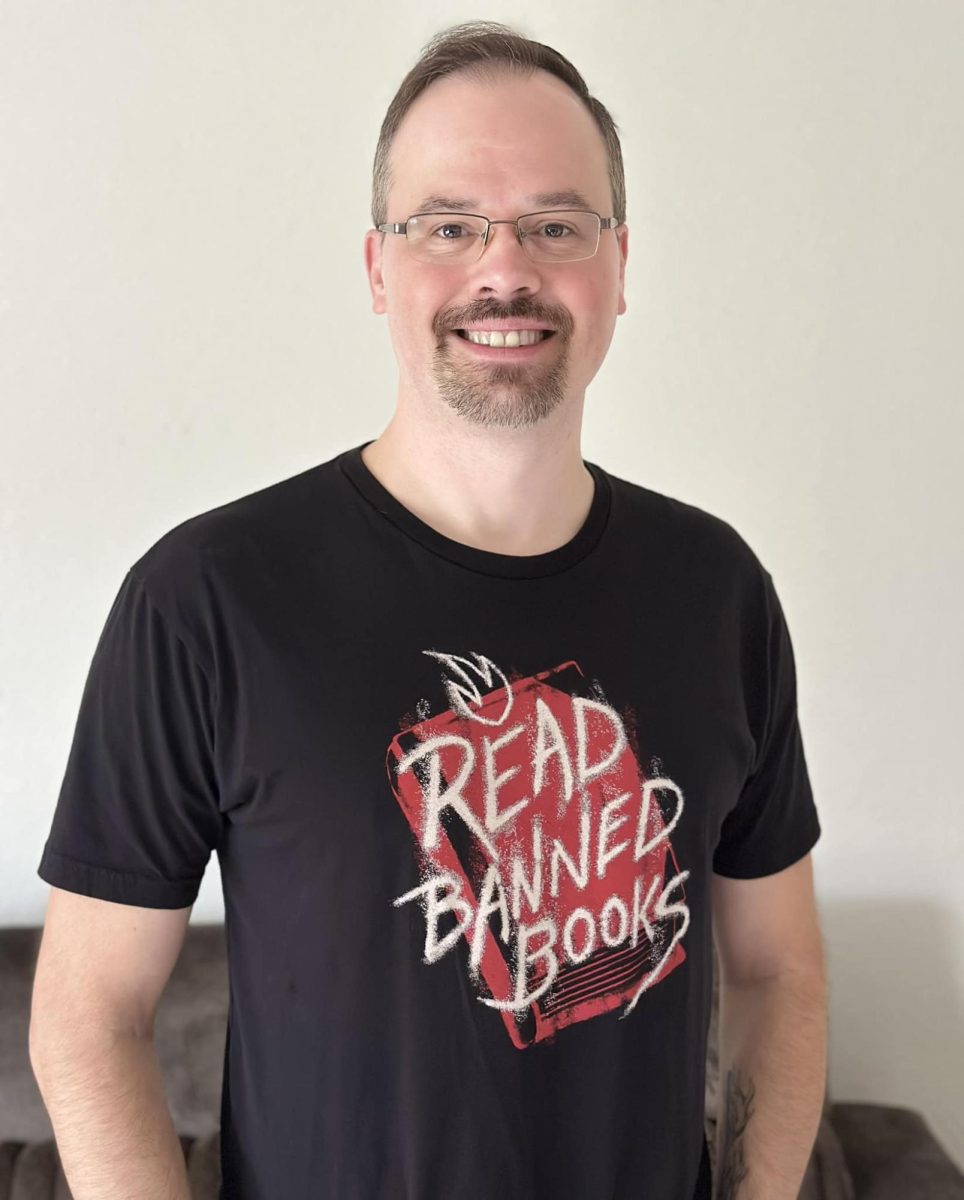

The ELM staff recently caught up with Eureka College alum and published author Anne Shaw Heinrich. She talked about her process, her books, and her time at Eureka.
If you want to hear more of Heinrich’s insights, you can check out her appearance on this podcast: https://kplpodcast.buzzsprout.com/1278428/episodes/19822787-kpl-podcast-september-2026-week-3-with-special-guest-anne-shaw-heinrich
1-Do you have any advice for anyone starting their writing journey?
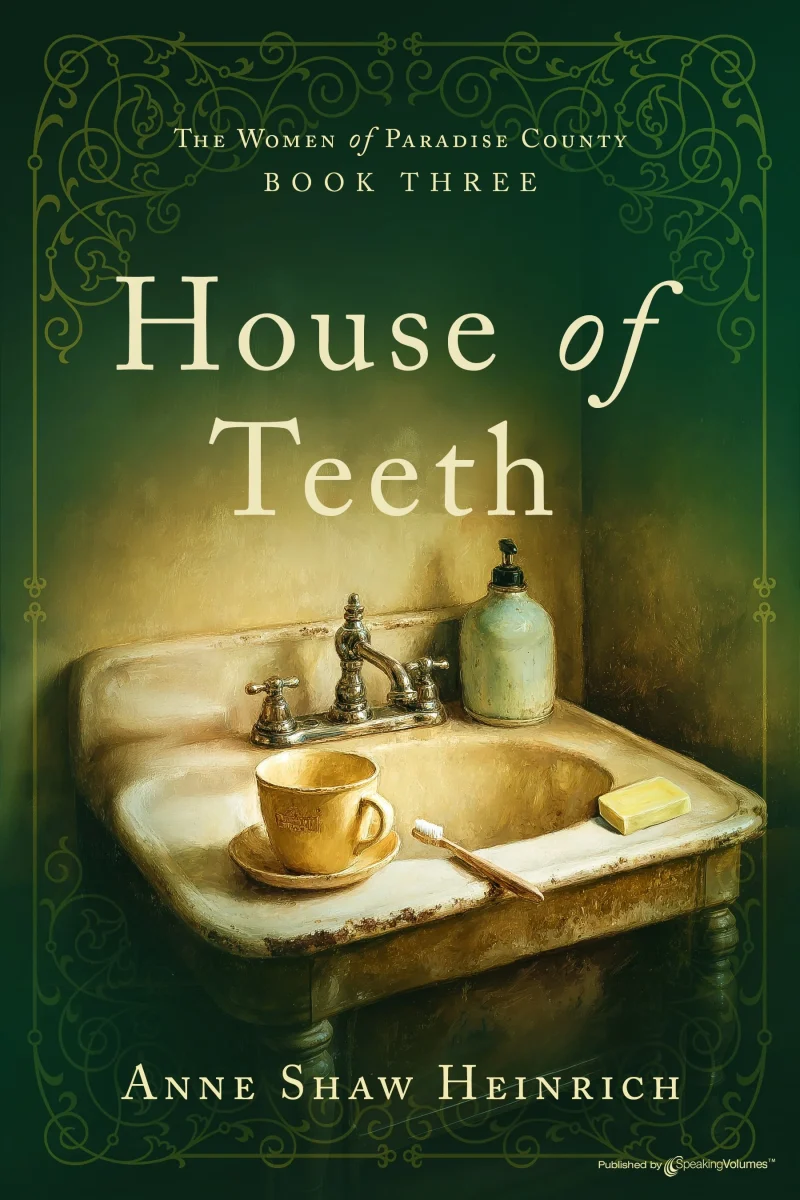
No two writers have the same path. There are a truly fortunate few who end up with an overnight success in publishing. Most writers do what we do because it brings us joy and we just can’t help ourselves. I always advise fellow writers of all ages to protect the joyful parts of the process. Rejections will come, and they do hurt in the beginning, but it’s just part of putting yourself out there. I always say that with each rejection letter, you’re one step closer to a yes! I think it’s also important to keep challenging ourselves. If we’ve written a few good things, or a few great things, we need to keep reminding ourselves that we haven’t written our best thing yet. I think it’s also a good idea to start with smaller goals. Sure, start writing a novel or a short story when you are inspired to do so, but it helps to also look for smaller wins in publishing. Submit essays, blogs, short stories, whatever you have cooking to smaller contests and calls for submission. These can help you build credibility. Also, just remember it’s not a race. I’ve loved writing since I was in high school and have been published in several ways since then, but I didn’t dive into The Women of Paradise County Series until I was 55 years old. I’m glad it’s worked out this way because I think I’m a much stronger writer now than I was back then. I certainly have a much more developed capacity for empathy and character development, and that’s critical for high-quality contemporary fiction writing that stands out. Keep writing!
2- What does your writing process look like from coming up with inspiration to drafting to editing and publishing?
I wish that I had an answer for this that was more linear! I cannot remember the last time I used an outline. This can be a messy way to craft a story, but when you are building complex characters and allowing them to breathe and interact with other characters and the world around them in ways that are authentic, it helps to not put limits on what’s next. I love to watch people and think about where they’ve been and where they might be going next. I do the same with characters. Whenever something compelling comes to mind that I think might need to be worked into a story, I write it down right away and save it for later when I’m staring at the empty page. I’ve been told that I have a fertile imagination, and that’s fair. I’ve also been characterized as a writer who writes by the seat of her pants. That’s fair, too! I am extremely fortunate to work with a very seasoned professional editor. We’ve worked together for a long time, and he’s not only incredibly supportive, but also pushes me to continue improving my craft. He’s a great thought partner. When you are writing a full novel, or especially a series, it’s helpful to have someone else in there with you who knows the story and characters as well as you do. I’ve learned a lot from him about pacing and maintaining consistency in style. He looks at my full draft, we identify what might be missing, and I keep writing while he starts editing. Sometimes we shuffle chapters, we tighten, we tweak. I’ve also learned a lot from him about using dialogue effectively. Once we’re happy with it, we send the final draft to the publisher for galley preparation and cover design. My editor and I participate in every step of that process, and while all that is happening, I’m also working with a publicist to plan the launch, getting advanced reader copies (ARCs) sent out for early reviews and other promotional work. It’s a lot, but I love every step of the process!
3- How did your time at Eureka influence your approach to writing?
My love for writing was born when I was in high school, but it was at Eureka College where I was challenged to write and think critically. I had the benefit of learning from exceptional faculty while at Eureka. I often say that I wish I could go back and take those classes with those professors again. I would have better questions this time around. I was an English major, but it wasn’t just the English faculty demanding rigorous research and high-quality writing. This was an expectation across the board, and it helped me to develop a strong work ethic, and most importantly, an understanding that I would never be finished learning and growing. I worked as an assistant in the English Department all four years, wrote for The Pegasus, and co-edited Impressions, the campus literary publication. I was lucky enough to be a Reagan Scholar, and the summer mentorships I had were incredible. It was during that first summer that my first mentor, the editor of Rockford Magazine, guided me through to my first published (and paid) article. Another summer I worked with the head of public relations at Meredith Publishing in Des Moines, Iowa, learning about the magazine industry as I shadowed writers, editors and other content creators for Better Homes and Gardens and Midwest Magazine. I am grateful.
4- What was the moment of inspiration for God Bless the Child?
I had just learned that an essay of mine had been accepted for publication in The New York Times bestseller The Right Words at the Right Time, Volume 2: Your Turn (Atria 2006). The essay, “Grandma’s Big Secret,” was about learning my grandmother was a lingerie model in the 1930s. It was through that experience that I got to know the two editors of that collection. They both asked me, “Why aren’t you writing more of this kind of stuff?” At the time, I was freelancing and raising our three young children. I didn’t have much time on my hands, but I took that question from these two seasoned industry professionals seriously. I started scratching out the first draft of God Bless the Child in a little café across the street from my youngest daughter’s preschool. I did it with a stack of yellow legal pads and a sharp pencil. That’s how the whole thing got started!
5- Was there a certain chapter or scene, either in God Bless the Child or any other piece you’ve written, that was tough for you to write? (either writing wise, character development, a certain situation that was happening, etc.?)
God Bless the Child is not an easy read, emotionally speaking. It tackles some really raw territory around mental illness, difficult mother-and-daughter relationships, disordered eating, reproductive choice, and sexual abuse. Those are not pleasant things to think or write about, but if done with empathy and compassion, and by providing multiple points of view, it’s possible to push readers to think in new ways about how people are forced to navigate living in a world that is broken. Being able to tell hard truths while creating space for redemption and light is something I find satisfying. The scene from God Bless the Child that was the most difficult for me to write comes from Elizabeth, who remembers watching out her living room window and witnessing a child get hit by a car. It took me a long time to get that scene right because I didn’t want it to be sensationalized or glossed over. The scene is based on a real memory from my own childhood, and that took some emotional energy to get it right. Still, it needed to be in there because it was a very concrete way to give the fictional child in the story a way to describe the tension building in her home.
6- Is there a piece that you’ve written that you have kept in the vault but would want to publish someday?
Yes, yes, yes! Once I’m finished with Unfettered, the fourth and final book in The Women of Paradise County Series, I’m going to dive into a standalone novel that will explore the impact of a serious mental illness on a family homesteading in Kansas right after the Civil War. It will be a love letter to a great, great, great grandmother of mine, and I hope, a commentary on women, lack of access to mental health care, and the impact on families. I can’t wait!